All About Antibody Asthma Attack Alleviation

As someone who has personally suffered from an asthma attack before, medications such as the FDA-approved omalizumab (marketed as Xolair) can be literal lifesavers. According to Mednet, omalizumab is a monoclonal antibody drug administered subcutaneously to reduce the number of asthma attacks experienced by the individual. In allergen-induced asthma, which is one of the most common types of asthma in children, the immune system incorrectly identifies innocuous allergens like pollen as pathogenic, mounting an IgE antibody response against the supposed invaders. The IgE antibodies attach to mast cells and basophils, triggering them to release histamine and cytokines that induce mucous production and bronchoconstriction, which are classic characteristics of asthma. Omalizumab acts by competitively binding to mast cell and basophil receptors, preventing IgE antibodies from attaching and triggering the allergic reaction. While omalizumab can decrease the frequency of asthma attacks, it cannot provide relief for asthma attacks already underway.

Omalizumab is a monoclonal antibody drug. Normally, when the body mounts an immune response against an antigen, multiple B cells are activated, leading to the production of antibodies that target multiple parts of the antigen. However, in addition to the relatively short lifespan of these B cells, problems arise when trying to design antibodies towards a single, specific target. To surmount these issues, B cells are fused with myeloma cells, creating hybridoma cells with high vitality and the ability to make the desired antibodies. Isolating and culturing the hybridoma cell that produces the single antibody against the desired target (mast cell/basophil receptors for omalizumab) can lead to production of large amounts of the therapeutic antibody. In other words, monoclonal antibodies are a dose of a unique antibody isolated from a culture that can bind to human immune cell receptors. For some monoclonal antibody drugs, the additional antibodies can serve as reinforcements for an otherwise weakened immune system. For omalizumab though, the antibodies don’t modify the initial immune response, but rather cordon off the immune response from reaching asthma-inducing cells.

Naturally, adding in foreign antibodies is not without consequence. Side effects of omalizumab include:

  • headaches
  • viral infections
  • upper respiratory tract infections
  • pain, redness, swelling, itching, and bruising at the injection site
  • anaphylaxis
  • fever
  • arthralgia
  • rash

These symptoms appear to largely be due to the presence of foreign antibodies, to which the body may react negatively, or due to the drug’s suppression of the immune system. When the body reacts negatively to the foreign antibodies, serum sickness can occur, causing headaches, general malaise, fever, arthralgia (joint pain), and rash. Interestingly, this reaction is a hypersensitivity reaction just like the asthma its supposed to treat. Since omalizumab treats allergic asthma by inhibiting the reactivity of mast cells and basophils, infections are more likely to occur, as the immunological messengers are unable to send out cytokine signals to rally an immune response. However, no other contraindications are listed for omalizumab. As a simple, straight-forward drug, Omalizumab is a prime example of how targeted monoclonal antibodies can be used to treat common ailments such as the ever-prevalent asthma.

26 Funny Woman Yelling At A Cat Memes | SayingImages.com
https://sayingimages.com/woman-yelling-at-a-cat-meme/

Coronavirus Titer Fighters

As the economic and social shutdown in the United States continues to drag on, the general public has been more and more eager to know when everything will return to normal. Yet, such a thing is hard to predict when many of the coronavirus drugs and vaccines are still under production, and our current knowledge of the spread of the virus comes from estimates that don’t factor in the unknown populations of untested patients. With unemployment rising to record levels, and an overwhelming amount of small businesses closed for the time being, it makes one wonder just how long our country can last in this standstill. Understandably, the government also wishes for as many people to return work as soon as possible, but it is paramount to prevent the further spread of the virus and ensure safety in doing so. It is therefore important to identify individuals who have immunity to the virus (and are therefore safe to return to the public) and those who still have virus in their bodies.

This is most easily done through antibody titers, which are measurements of bloodstream antibodies, one of the immune system’s soldiers that target specific pathogens. When these titers are taken from blood serum samples, they are known as serology tests. The tests can reveal the status of the immune response to coronavirus, which would be useful in determining who can re-enter the workforce safely. For example, a pure IgM titer can indicate infection early on in a patient who has never been infected before, and an IgG titer can indicate how likely one is to be immune to future infections (a positive IgG titer would imply that the individual has encountered Covid-19 and developed a strong response to and future protection against it). A combination of IgM and IgG titer can be used to track the overall progression of the immune response. Yet, a New York Times article reporting on such tests notes that the serology tests are not a one-stop ticket to release from quarantine. Some patients may have less effective antibodies, while others show immunity despite having low antibody levels.

However, it is encouraging to see the amount of effort being put forth to tackle the monumental issue of Covid-19 testing. The CDC and WHO are mounting projects to tackle mass testing, and researchers are investigating more robust tests that decrease false positives and false negatives. There are still many unknowns to tackle though; a recent paper investigating Covid-19 titers of recovered patients found a wide variety of antibody levels in these individuals – suggesting that other immune factors may be involved and that antibody testing alone is insufficient to declare immunity. It is also unknown whether immunity lasts forever, or if reinfection is a concern. Although much more research is needed on how exactly the virus attacks and how our body responds, the emergence of novel titers in the fight against Covid-19 gives us new hope in an otherwise bleak landscape.

don't be Ig-norant with antibodies - Hypoglycaemic Memes for ...
https://www.facebook.com/HypoMemesDiabeticTeens/photos/dont-be-ig-norant-with-antibodies/1498572036879633/

A Coronavirus Solution Revolution

As much of the public find themselves cooped up at home with nothing to do, many others are on the front lines of battle with Covid-19, either as healthcare personnel or as researchers rapidly searching for a treatment or cure. Yet many of these individuals lay behind the scenes, masked by media coverage of imminent personal protective equipment (PPE) and ventilator shortage and growing statistics of infected and dead. However, it is the efforts of these people that drives the fight against Covid-19 forward two fronts: search for vaccines and search for drugs as treatments. Whereas the Covid-19 drug search seeks to find ways to more effectively treat the root of the viral infection rather than alleviating symptoms, the vaccine search seeks a method to protect the masses from the virus in the first place. Until a proven solution for either is definitively found though, updates regarding the efforts probably won’t make it to the general media, so as to not give false hopes.

One group making significant progress in the Covid-19 vaccine field is Moderna, who is developing an mRNA-based vaccine that elicits an antiviral immune response in the patient. They leveraged their previous experience working with SARS and MERS vaccine development to get a head start on Covid-19. The NIH reports that Moderna is currently in Phase 1 of clinical trials, in which the proper dosage of the vaccine in humans will be determined. While Moderna is leading the pack of roughly 50 other vaccine efforts, they still have a ways to go (Phase 2 and Phase 3 of clinical trials) before the vaccine can be administered to the public, even with relaxed FDA standards. Even if they work at the same speed they have been, Moderna scientists could still have multiple months left of testing to do; at this point all we can do is wait.

On the other side of the R&D effort is the search for a drug to mitigate the effects of Covid-19 infection. One such drug that has made its rounds through the media recently is chloroquine, a drug that has previously been used to treat malaria. Unfortunately, media attention to the possible remedial effects of chloroquine has caused certain people to self-medicate chloroquine, even tho it has not been tested nor approved as a treatment for Covid-19. As public health officials try to curb the misinformation spreading regarding chloroquine, researchers are investigating its potential use as a legitimate Covid-19 treatment; rumors aren’t without basis after all. In a recent paper, researchers found the drug to be highly effective in reducing viral quantity in cells, though it has yet to be thoroughly proven in humans. Medical panels have nonetheless pushed for its proper, medical use as a supplement to oxygen therapy. Hopefully, in the coming weeks, research will uncover more and more treatment options to push back the scourge of coronavirus.

Coronavirus Memes to Ease The Tension | Houston Press
https://www.houstonpress.com/arts/coronavirus-memes-to-ease-the-tension-11455806

Tea Time with T-Cell Therapy

Cancer seems to be the ultimate scourge of medicine. It ruthlessly and indiscriminately kills, and shows no significant decline even after humanity sends an army of researchers and doctors to combat it. Sometimes, we are fortuitous to find clues that lead us to closer to a cure for cancer, the holy grail of medicinal academia, but these ventures are reported once in the news and never heard of again, succumbing to the scrutiny of the FDA and the struggle of passing through clinical trials. Even though there are many treatments for cancer out there such as different combinations of chemotherapy, the fight with cancer is almost always an uphill one. Yet, the constant emergence of new and promising technologies brings hope to the desolate battlefield.

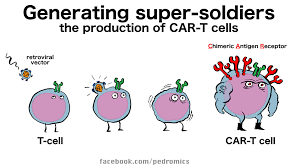
One such technology is chimeric antigen receptor t-cell therapy (CAR T-cell therapy), which has been shown to be effective at treating certain leukemias and is being investigated for use in solid tumors. The technology uses cytotoxic T-cells that have been genetically modified to express a chimeric antigen receptor that specifically targets tumor cells. Upon binding to the tumor cell, the CAR T-cell initiates apoptosis in the malignant cell, destroying it. However, according to a recent review published in Cancers, solid tumors are varied in their location and composition and complex in their defensive mechanisms, making the CAR T-cell effort more difficult. There is also the risk of side effects such as toxicity from the cytokines released by these genetically foreign cells. Although the technology seems promising, there appears to be a lot to be done before it can be generalized and personalized for all cancers.

The true efficacy of CAR T-cell therapy is still being investigated, but it is clear that one large issue at hand is the accessibility of this life-saving procedure. Even though only one infusion is needed to exhibit noticeable outcomes in the patient, this single dose can cost upwards of $373,000. This has brought up debate as to whether a therapy that could buy a large house but isn’t guaranteed to cure is worth the money over other more tried and true (though equally dubious in success rate) methods. Perhaps as research find better ways to manufacture and administer these medications, prices will drastically decrease. Yet its unknown how long that could take, and another technology could easily arise within that time and render CAR T-cells obsolete. Nevertheless, the strong academic force pushing for the success of cancer therapy is encouraging, and one worth talking about periodically, perhaps over tea.

Pedromics - BioLegend referring back to the podcast where ...
https://www.facebook.com/pedromics/posts/biolegend-referring-back-to-the-podcast-where-we-talked-about-car-t-cells-roughl/597537200438976/

Much ado with nothing to do

With the advent of the coronavirus pandemic reaching the United States, everyday life has more or less been completely flipped upside down. My daily step counter remains solidly below 500, and move a grand total of maybe 500 ft in a day. Nearly all obligations have been dropped – research, clubs, hangouts – and a life of monotony characterized by a struggle to maintain a productive schedule is the replacement. One might say, “well, now you have time to do everything you’ve been meaning to do,” right? Yet, as an extrovert, I can only do the same isolated activities for so long before yearning for the forbidden presence of others on a platform besides zoom and Facebook Messenger. The days fly by in obscurity as I languidly watch the final days of my college career disintegrate, bittersweet due to the absence of stress and lack of excitement.

Perhaps more interesting than my life is the chaos that has swept through the nation, and especially the Chinese-American community. Be it via questionably accurate WeChat articles on home remedies for Covid-19 or through word of text (since we don’t see anyone in person anymore), the panic, concern, and topic of the pandemic and how to respond to it pervades Chinese households. Memes of stocking up for the apocalypse are no longer just jokes; even the New York Times reported on the concerning rate of toilet paper disappearance from store shelves. Though I personally don’t know anyone affected by the virus, the collectivist culture of the Chinese community has inherently exposed many areas of my life (school, friends, family, church) to this heightened state of awareness. To this end, my mom sent me a Ziploc bag of surgical masks, nitrile gloves, and a bottle of hand sanitizer.

On the other hand though, there is something comforting about the uniformity of everyone’s situation. Zoom calls with friends reassure me that I am not the only person waking up at noon and pretending to do homework I wish I didn’t have. Memes online are more relatable than ever, and the content never seems to dwindle. Amidst all the panic lies the fact that we’re all just trying to get through these tough times together. No one knows what happening or whats going to happen – not the government, not the university, not the faculty, and most definitely not the students like myself. All we can do at this point is sit and wait.

10 Hilarious Coronavirus Memes That Hit Too Close to Home ...
https://urbanmatter.com/phoenix/10-hilarious-coronavirus-memes-that-hit-too-close-to-home/

Let’s talk about STDs, baby

Perhaps it’s the changing social atmosphere, perhaps its the medical advancements in the field, or perhaps it’s the emergence of other epidemics that steal media attention, but for one reason or another, no one is talking about sexually transmitted diseases (STDs) anymore. Less than a decade ago, STDs seemed to be one of the most prevalent diseases that high-schoolers and adolescents were cautioned against, and even the news covered stories of sex ed revamps around the US. Yet now, STDs are rarely mentioned anymore as a serious concern for this age group. I’ve only heard talk about them in microbiology lectures and MCAT study books. However, a few years is not enough to eradicate this category of diseases in its entirety, and their effects remain just as potent as they were before.

STDs are very much still a major public health concern. A recent paper cites that more than one million STDs are acquired every day, and many of them are non-HIV diseases such as gonorrhea and chlamydia. The overwhelming coverage and response to the HIV crisis in the US led not only to drastic decreases in AIDS deaths, but also to exposing the severity of HIV to the public eye. Yet, the lens that focused on HIV concurrently shadowed other STDs from the vocabularies of millennial Americans. A public outbreak of gonorrhea shouldn’t be necessary for increased public support and funding for the struggling research of STD vaccines. In fact, the HIV programs in place now have significantly helped treat, cure, and support HIV patients, so it’s not a far shot to believe that the same could be said for other STDs.

This support would be crucial, because the development of vaccines for STDs is difficult, complicated by complex pathogen structure and antigenic variation. Gonorrhea especially, which experiences nearly 80 million new cases every year, remains difficult to crack, as it quickly develops antibiotic resistance. However, according to one study, even a partially-effective gonorrhea vaccine, when implemented with a strategy that targets susceptible patients, could reduce gonorrhea incidence by 90% in the next decade. The problem, of course, is that such a strategy would need to be implemented into a population that isn’t aware of the lurking dangers of STDs that stay out of the spotlight. Without social support, the bitter battle between vaccine researchers and adapting pathogens can only continue to wage on.

The Persistent Existence of Antibiotic Resistance

Its always interesting to compare the public perception of scientific technologies to their corresponding scientific interpretation. In the case of antibiotics, the word “antibiotics” is often seen by the layman as a panacea to illness and disease; a prescription should equal recovery. And yet, the true war between the ever-evolving infectious microbes and the commanding scientists developing troops of medicine for immunological warfare remains largely hidden from the public eye. Even though news of antibiotic resistance is on the rise due to its increasing imminence, it has yet to be as largely publicized as other health concerns such as obesity or the coronavirus. As such, antibiotic use has continued to be abused to a concerning extent, and more should be done to combat this silent epidemic.

Perhaps one of the reasons no one outside of the scientific community is paying attention to the issue of antibiotic resistance is that it doesn’t appear real or tangible enough; people aren’t dying directly because of it. And yet, it’s a big enough concern that the World Health Organization published an article outlining the threat antibiotic resistance poses to global health. In addition to over-presciption of antibiotics in cases where they aren’t necessary or effective (as in viral infections and patients whose symptoms can be controlled otherwise), the WHO notes that a lack of private investment into the research for new antibiotic agents has placed a limit on the efficacy of initiatives to combat antimicrobial resistance. In other words, the people with the money capable of driving innovation don’t care enough about this problem. Moreover, countries, not just individual physicians, need to implement policies that directly affect this issue because otherwise, no one will be motivated enough to make a difference before it’s too late.

Another global driving issue behind antimicrobial resistance lies in the livestock industry. Zhang et al. note that antibiotics are widely used in livestock animals for disease and infection control as well as for feed additives to promote animal growth. However, excessive use of antibiotics becomes an issue when much of the antibiotics that are used are actually excreted by the animals into the environment. Now the antibiotics are purely detrimental, serving no purpose beneficial to humankind and only increasing the robustness of the antibiotic resistant microbial population. Once again, the public aren’t made privy to what is going on behind the scenes, and even labels such as “antibiotic-free meat” are vague and offer no insight to this battle. It’s no wonder then, and a great concern, that no one is talking about the growing dangers of antibiotic resistance.

O Polio, Polio, wherefore art thou Polio?

Conversation around vaccines has become commonplace amongst the public now, either via heated debates on Facebook or via the ubiquitous reminders by physicians and health care providers to vaccinate for the annual flu season. Yet, for much of the Millennial and Generation Z population, vaccines are more of a routine checklist item than an actual life-saving medical technology. Most of these people have not had to experience the tragedy of witnessing a close relative or friend deteriorate under the influence of the polio virus. This has largely been due to the widespread use of the inactivated polio vaccine (IPV) and the oral polio vaccine (OPV), which have reduced the number of worldwide polio cases to an astonishingly low 330, according to the Polio Global Eradication Initiative. In fact, the once widespread polio is now one of the few diseases that is closest to being eradicated in the world right now, which is an amazing feat of human innovation and dedication.

Yet, researchers are still working around the clock to make sure that once the number of polio patients finally reaches zero, there are no resurgences. Due to possible mutations in the live viruses of OPV, vaccine-derived polioviruses (VDPVs) could cause problems even if the wild type poliovirus is eradicated. Ironically, there are more polio cases due to VDPVs than wild-type polioviruses; the solution has merely led to greater problems. As a result, efforts are being made to phase out OPV in favor of IPV, but this means that a large increase in IPVs will be needed, as many countries routinely vaccinate with OPV. Thus, even though polio is nearly a closed case, its end surprisingly presents vast opportunities for innovation and competition. It’s reassuring to see that, even though this disease currently affects so few people, that such significant efforts are still being made to see its finale through all the way.

It is also interesting to note that in the conversation on vaccines, the successful efforts regarding the near eradication of polio due to its vaccine is nowhere to be seen. In vaccine debates against anti-vaxxers, the efficacy of the polio vaccine isn’t used as a strong point of support for vaccines, which is detrimental to scientific communication. After all, a large portion of the idea behind vaccines is not only to grant immunity to the individual, but to immunize the entire population, thereby eradicating the root of the issue by herd immunity. Yet, much of the vaccine discussion hinges on the content of the vaccines rather than their efficacy. Perhaps it is precisely because of polio’s scarcity that it is rarely talked about in the vaccine conversation, relegated to the realm of irrelevancy. Nevertheless, whether in the public eye or not, the polio vaccine has contributed greatly to a fight that will, hopefully within the next decade, reach resolution.

Ante up with Anti-vaxxers

Ever since the defamation case of Andrew Wakefield, the public perception of vaccines has taken a tumble. People who refuse to and advocate against vaccinating themselves and their children can be found readily on the internet and on social media platforms. Even in communities where the anti-vaccination opinion is less prevalent, the subject of vaccination remains a hot topic of conversation. At the heart of it all, anti-vaxxers, as they’re called, hold skepticism and disdain towards those who would tell them what to do or merely shove facts in their face for no more reason than “because science said so”. Pro-vaxxers, on the other hand, are concerned that anti-vaxxers are not only gambling their own lives away, but also endangering those around them when such a simple is readily available in a developed nation such as the United States. This debate has even spread to people who aren’t as informed on either side, leading to what’s known as vaccine hesitancy.

However, this stubbornness of both sides may be due to a lack of proper education or communication, as is often the case with scientific debate. The Canadian Communicable Disease Report recently published an article discussing effective methods for communicating information to address vaccine hesitancy. It describes how much of the current ways vaccine facts are communicated are not only insensitive, but also improperly presented. This is often the case in social media conversations, where the interactions between anti-vaxxers and pro-vaxxers appears more like warfare than a civilized discussion; the facts presented to the anti-vaxxers may even make them more resolute in their beliefs. The fact that this report was endorsed by the Canadian government highlights the severity of the situation surrounding vaccine misinformation and hesitancy.

The question then arises: how did this scientific schism even reach such a state? A paper in the scientific journal Vaccine notes that user-based Facebook advertising has significantly contributed to the dissemination of vaccine-related misinformation. These ad campaigns are similar to targeted political ad campaigns; they merely polarize users’ beliefs by selectively exposing users to what they already know and agree with. Moreover, the misinformation is easily spread on a social media platform where sharing scientifically questionable articles and posts are merely a click away. Unless something drastic is implemented regarding this misinformation, more and more people are going to succumb to the gamble of refusing vaccination.

Gut Flora or a Fedora Aura

These days, the term “probiotic” seems to pervade the dairy and drinks sections of supermarkets everywhere. There are probiotic yogurts, probiotic drinks, and probiotic yogurt drinks. The rise in popularity of kombucha and the popularity of fermented foods like kimchi and miso have also contributed to the probiotic health craze. The increase in public consciousness about maintaining a healthy gut microbiome can be seen as both a success for the food companies’ marketing teams as well as a success for science communicators, since the idea of microbes and bacteria are no longer necessarily assigned a negative connotation. And yet, even if these foods have been shown to be beneficial to the gut flora, even microbiologists are having a hard time agreeing what exactly goes on behind the scenes.

It has long been known that the human digestive system hosts a plethora of microbes that are essential to our daily functioning. Accordingly, the field of microbiology has been pushing to understand the multitude of interactions between these microbes, their metabolites, and the human body. However, as Tiffany and Baumler note in their review of the topic, further cataloging of the gut microbiota has progressively yielded less and less understanding of the normal gut ecosystem as a whole. There are cases upon cases of aberrant gut flora compositions, but if there isn’t even a consolidated concept of what constitutes a normal microbiome, how can these cases truly be considered deviant? It’s possible that, just like how the “superfood” category seems to get an overhaul every decade, the idea of probiotics could completely change within the next few years of microbiology research.

That isn’t to say that research has turned up absolutely nothing useful though. Studies have shown that, even though the exact mechanisms of action may not be known, certain stressors like nutrition and medication can alter the functioning of the microbiome. Moreover, the reverse relationship has also been found, in that microbiota has been associated with many cancers as well as the metabolic effect of many drugs. Even if these studies are mere snapshots into the grander picture of the human microbiome, they provide useful therapeutic pathways and knowledge that cannot be understated. Therefore, the more we don our investigative fedora in the realm of the human microbiome, the more the “probiotic” label becomes less of a marketing tactic and more of a well fleshed-out science.