Blog Feed

On coronavirus and beer.

Shortly after the New Year’s festivities ended and the world ushered in a new year and decade, news quickly spread about a new emerging disease from Wuhan, China that was quickly becoming deadly. Designated 2019-nCoV but colloquially known as the coronavirus, coverage of the quickly spreading virus from Wuhan filled every media portal and news outlet. However, given the previous outbreaks of SARS and MERS in the past 20 years (coronavirus epidemics that had garnered global attention), national health organization and the World Health Organization had implemented better practices and prevention programs aimed at containing any future coronavirus such as the 2019-nCoV. However, concerns over the coronavirus grew as cases popped up in other countries from people who had traveled from Wuhan. The internet community quickly reacted to the possible pandemic with humor and memes, but as the infection truly began to spread, alarm spread throughout communities (especially the Chinese community) in proximity to these new cases. Events were cancelled for fear of contracting the deadly disease, and face-masks were sold out in an effort to prevent any further spread.

Much of the danger lies in the unknown of the coronavirus. A report in the New England Journal of Medicine notes that much of the information on epidemiology that would be useful in tracing the transmission of the disease is unavailable. Accordingly, it is very difficult to contain the disease, as it is unknown how easy it to transmit. Even if a source patient is identified, it is difficult to say if easily accessible fomites need to be quarantined or if direct contact is all that’s needed. Another difficulty noted in the New England Journal of Medicine is that there is no clear identifying symptom with the 2019-nCoV, unlike SARS and Ebola. This makes the disease harder to contain, as source patients may view mild symptoms as unproblematic and travel internationally, contributing to a possible pandemic. However, widespread knowledge of this fact has made the general public more cautious towards the virus, especially since the SARS and MERS epidemics are still fresh in the minds of many.

Nevertheless, efforts are being made to address the current outbreak. WHO has declared the coronavirus as a global health emergency, raising global awareness for the disease and enacting policy to attempt to contain it. Airlines have placed bans on travel to and from Wuhan, where the virus originated, in an effort to cease further spread of the disease. Reliable laboratory diagnosis is being developed and tested based on genetically related specimens, as original patient specimens have yet to become available to the international community. Chinese scientists have shared data on the sequencing of the 2019-CoV genome to the scientific community before official publication, showing their dedication to this cause. The public has also been constantly updated; most recently, it was publicized that alcohol and hand-washing were the most adequate ways to defeat the enveloped virus. In this current global panic, the world is responding rapidly in an effort to prevent any impending disaster.

Everyone’s a viral social media influenza.

As the air cools and summer turns into autumn, the wonderful colors that emerge on tree leaves are accompanied by the seemingly overnight emergence of ubiquitous signs reminding the general public to get their flu shots as soon as possible. Every pharmacy in sight sports notices persuading you to get your flu shot even UNC’s Student Stores. And yet, this is understandable. Despite its colloquial name (“the flu”) and its prevalence in conversation during the flu season, the severity of the influenza virus is often understated; many people every year are hospitalized because of a flu infection, and an influenza infection can even result in death. Yet, interestingly, perhaps because of its concurrence with the seasonal increase in the less-severe common cold, the common perception often equates the flu with the cold. It is difficult to determine the direction of causality here – maybe downplaying the flu leads to stronger efforts to get people to vaccinate, and perhaps the prevalence of vaccinations desensitizes the public to its potential epidemic danger.

The flu is notorious for being easily spread and highly contagious; anyone could have the flu. It is spread by respiratory droplets that are expelled from an infected individual via uncovered sneezes, coughs, and even talking. The virus can be especially dangerous to persons with compromised immunity, such as children, the immunocompromised, and patients susceptible to secondary infection. The CDC has already reported 78 pediatric influenza-related deaths during the 2019-2020 flu season out of a total of 12,000. They have also reported a total of at least 22 million influenza illnesses, and a general increase in the trend of influenza activity. Also, the percentage of total deaths attributed to pneumonia and influenza has climbed to 7.1%, which is still under the 7.2% threshold for an epidemic, albeit very close.

On the other side of this seasonal battle lies the flu vaccine, which has been shown to be effective, despite what some may say on social media. Many studies have constantly proved the efficacy of the different types of flu vaccines and showed a lack of any accompanying adverse effects. Although the efficacy estimates for the current flu vaccine in the 2019-2020 season have yet to be released, the CDC reports that vaccination remains the best way to prevent both the flu and any associated complications. Luckily, current antivirals suggested for use during this flu season have also been reported to be effective on almost all viruses that have been subjected to laboratory testing this season. All in all, even if we are all possible contributors to the spread this highly contagious virus, it would appear that this flu season isn’t any worse than what we’ve already made it through.

Andrew Wakefield was not the most woke in his field.

In many corners of the world of academia, Andrew Wakefield is a household name synonymous with bad experimental design and the consequence of faulty research. But what exactly did he do to earn such ire? Wakefield and his colleagues published a study in the prestigious scientific journal The Lancet that ultimately concluded a positive correlation between the measles, mumps and rubella (MMR) vaccines and autism. Many papers have been authored that have documented and refuted these claims, pointing out large fallacies in the way the generalized conclusion was derived from an inherently flawed sample of just 12 children. After all, he neglected to test children without developmental disorders, and none of the children with these developmental disorders failed to receive the vaccine to serve as controls. Epidemiological studies have found no causal relationship between MMR vaccine and autism, completely shutting down the Wakefield paper. The debacle only devolved further after Wakefield disclosed conflicting financial interests, having been funded by lawyers involved in lawsuits against vaccine-producing companies. Even though they were exonerated of ethical misconduct, Wakefield et al were found guilty of fraud; they selectively chose to publish data for financial gain. This, if anything, justifies the doubt and skepticism directed at Wakefield.

The most frightening aspect of the Wakefield story, though, lies not in his questionably motivated science, but rather the lasting impact that his falsified research had on the general public. Despite the mountain of evidence supporting the safety of vaccines, concerns and resultant hesitations towards vaccinations have increased the general population’s risk of contracting measles and mumps. It’s amazing how even after being presented with hard facts, some people cling to the set of data that merely reaffirms their existing beliefs. In fact, it has been reported that lack of vaccination due to vaccine hesitancy is not only a risk factor for mumps outbreaks, but such persons have also been the source patient for many recent US outbreaks. So not only has the scourge of anti-vaccine individuals caused increased illness amongst themselves, but the entire nation is also put in danger due to their negligence.

Another point of interest to consider regarding the downstream effects of the Wakefield paper is how reputation plays a role in the scientific community. Wakefield serves as an excellent example of the nuances of status in academia. Firstly, regardless of how much his peers contributed to the paper, Andrew Wakefield is the name that everyone knows, not Murch or Linnell. Having the position of first author on a paper not only confers all glory associated with that paper, but also all disdain. It is also intriguing to note how such a flawed paper managed to bypass the multitude of reviewers that maintain the respectability of a prominent scientific journal such as The Lancet. It brings into question just how much faulty science could be out there in lesser known journals. This is particularly concerning as, often times, such small papers can easily be referenced, and the foundation of any future papers that do as such can be completely undermined. Luckily, the Wakefield paper was scrutinized early on and the scientific community has consequently shown that Andrew Wakefield was, in fact, not the most woke in his field.

Is Cereal a Soup?

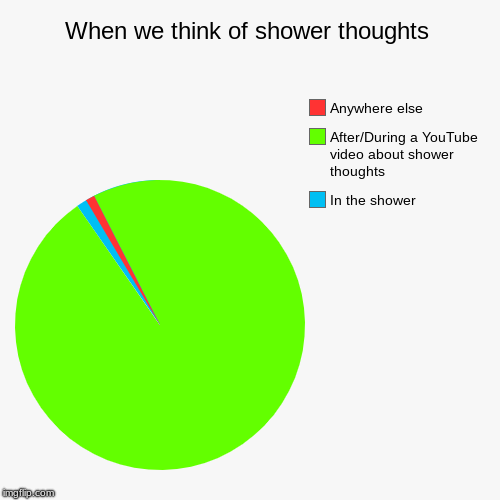
The question itself is really quite rhetorical, but I enjoy musing about random things and all things puns and wordplay. Jokes and riddles bring smiles to my face and I love puzzles of all sorts: physical, jigsaw, logic, etc. I find joy in the act of learning itself, as new information, STEM or not, is as rewarding as the punchline of a joke or the solution to a clever riddle. Shower thoughts like “is cereal a soup” are not so much a question to be seriously pondered but a way to look at the world in unconventional ways, to constantly think outside of the box and not be restricted to a single mindset.

undefined

But Is Cereal a Soup?

In gastronomy studies, a soup is thought to require some additive or thickener that grants a soup its characteristic taste and texture, which most often takes the form of corn starch. The question for thought, then, is whether or not milk satisfies this requirement as an additive. This is left as an exercise to the reader.